
- All
- Product Name
- Product Keyword
- Product Model
- Product Summary
- Product Description
- Multi Field Search
Views: 0 Author: Site Editor Publish Time: 2026-04-27 Origin: Site
Moissanite is a unique gemstone often compared to diamonds because of its brilliance, fire, and durability. As its popularity in engagement rings and fine jewelry grows, questions arise about how it behaves under standard diamond testing equipment. Understanding whether moissanite can pass as a diamond on testers is crucial for jewelers, collectors, and consumers seeking accurate gemstone authentication.
Diamond testers measure either thermal conductivity or electrical conductivity to determine if a gemstone is a diamond. Thermal conductivity testers detect how quickly heat moves through the stone, while electrical testers analyze the stone’s ability to conduct electricity, which varies across gemstone types.
· Handheld Thermal Testers: Quick and convenient, but less precise.
· Electrical Conductivity Testers: Can differentiate diamonds from moissanite and other simulants.
· Combined Testers: Use both thermal and electrical readings for higher accuracy.
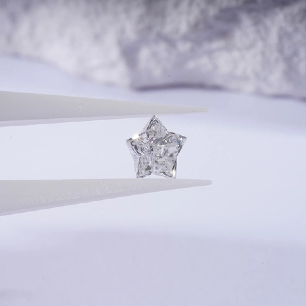
Moissanite exhibits high thermal conductivity, similar to diamonds. Basic thermal testers may interpret this as a diamond reading.
Due to silicon carbide’s material properties, moissanite’s heat transfer closely resembles that of diamonds. This can lead to false positives, especially when using standard handheld testers.
Many jewelers report that even colorless moissanite can register as a diamond under quick thermal testing, particularly when stones are well-cut and polished.
Moissanite’s thermal conductivity allows it to efficiently transfer heat, tricking thermal testers into showing a “diamond” reading.
Unlike diamonds, moissanite conducts electricity differently. Advanced testers detect this difference, preventing misidentification.
Stone temperature can influence tester accuracy. Cold or warm stones may slightly alter readings.
Smaller stones can produce less accurate readings due to limited heat conduction area.
Internal flaws or inclusions can slightly affect how heat travels through the stone, impacting tester results.
Moissanite’s ability to pass basic diamond testers stems from its unique scientific properties. Its high thermal conductivity, impressive hardness, and transparent, sparkling appearance closely mimic diamonds under heat-based testing. Both natural and lab-grown moissanite display these traits, making them appear nearly identical to diamonds in standard testing scenarios.
This property makes moissanite jewelry a popular, cost-effective alternative for engagement rings, earrings, and other fine pieces. It allows consumers to enjoy the brilliance of diamonds without the higher price.
Moissanite offers durability, dazzling sparkle, and ethical sourcing options. Its diamond-like qualities combined with affordability make it an attractive choice for modern jewelry lovers.
Moissanite is a remarkable gemstone, often compared to diamonds because of its exceptional brilliance, hardness, and visual appeal. A common question among consumers and jewelers is whether all moissanite stones can pass diamond testers. Diamond testers are devices designed to measure properties like thermal or electrical conductivity to identify genuine diamonds. While moissanite shares some similar properties with diamonds, subtle differences in color, clarity, and cut can influence how these testers respond. Understanding these nuances helps collectors, jewelers, and buyers avoid misidentification and ensures accurate appraisal when evaluating moissanite alongside diamonds in fine jewelry.
Moissanite comes in various grades, including colorless (D-F) and near-colorless stones (G-H or slightly tinted). Slight hues in near-colorless moissanite can marginally affect thermal readings on basic diamond testers. These slight variations, however, rarely prevent moissanite from passing as a diamond under standard thermal testers. For example, a near-colorless moissanite with a subtle yellow tint may show a slightly weaker thermal response than a completely colorless stone. Advanced testers and professional evaluation, however, can detect these subtle differences and ensure accurate identification, highlighting the importance of understanding how color grades influence tester readings.
While color variations in moissanite might influence tester readings slightly, they generally do not affect visual identification to the naked eye. A high-quality near-colorless stone may appear virtually identical to a colorless stone in everyday settings. Jewelers often consider both aesthetic appeal and technical characteristics when assessing moissanite. Minor color differences, although sometimes measurable in thermal readings, usually do not interfere with the stone’s overall brilliance, fire, or perceived quality. Consumers can confidently select near-colorless moissanite for rings and jewelry without compromising visual beauty.
Cut angles play a significant role in how a gemstone conducts heat. Sharper, precisely angled facets in moissanite can enhance thermal conductivity, causing it to mimic the diamond’s response more convincingly on basic testers. Conversely, shallow or improperly proportioned cuts may reduce heat flow, leading to weaker readings. This effect underscores why high-quality, well-cut moissanite stones are more likely to pass diamond tests. A carefully proportioned Round Brilliant or Cushion cut, for instance, not only maximizes sparkle but also influences how heat is conducted throughout the stone during testing.
Clarity is another critical factor influencing diamond tester performance. Inclusion-free or minimally included moissanite allows heat to pass more uniformly, creating a response similar to a diamond. Stones with noticeable inclusions or internal imperfections may conduct heat unevenly, occasionally resulting in ambiguous readings on handheld testers. In practice, high-quality moissanite, especially lab-grown stones with controlled clarity, can closely replicate diamond readings. This characteristic is particularly useful for jewelers who need to demonstrate authenticity while maintaining visual appeal.
Basic thermal testers measure heat conductivity to distinguish diamonds from other gemstones. Moissanite’s thermal conductivity is close to that of diamond, which explains why many moissanite stones produce diamond-like readings. This overlap can lead to confusion for casual users, making it appear as though moissanite is indistinguishable from diamond on such devices.
More advanced testers assess electrical conductivity in addition to thermal properties. These devices can differentiate moissanite from diamonds more reliably, as moissanite exhibits distinct electrical characteristics. While basic testers provide a convenient initial check, professional equipment is necessary for precise identification, especially for near-colorless stones or those with unusual cuts.
User error is another source of inaccurate results. Inexperienced individuals may misread a tester or fail to account for factors like stone temperature, size, or surface cleanliness. Such errors highlight the importance of professional evaluation, especially for high-value moissanite or diamonds. Combining technical knowledge with proper tools ensures accurate gemstone identification.
For the most reliable results, jewelers often combine thermal and electrical testers. Thermal testers measure heat conductivity, while electrical testers detect the gemstone’s response to an electric current. Together, these readings provide a comprehensive assessment, differentiating moissanite from diamond with high accuracy. This combined approach is particularly useful for stones that are near-colorless, unusually large, or feature complex cuts.
Magnification tools such as loupes or microscopes allow jewelers to examine moissanite closely. Observing facets, internal inclusions, and optical properties helps reveal subtle differences between moissanite and diamonds. A loupe can also detect slight doubling of facets in moissanite due to its double refraction, a feature absent in diamonds. This method complements technical testers and provides visual confirmation for buyers and sellers alike.
· Refractive Index: Moissanite (2.65–2.69) vs Diamond (2.42) – measuring how light bends through the stone helps differentiate the two.
· Hardness Tests: Moissanite ranks 9.25 on the Mohs scale, slightly below diamond’s 10, offering another verification clue.
· Optical Observation: Examining the stone under polarized light or using spectroscopy can further confirm identity.
Even at home, consumers can perform simple checks to gauge moissanite authenticity:
· Observe Fire and Rainbow Flashes: Bright sunlight reveals moissanite’s distinctive colorful dispersion.
· Check for Double Refraction: Using a loupe, slight facet doubling confirms moissanite, as diamonds are singly refractive.
Combining these tests provides confidence in distinguishing moissanite from diamonds while highlighting its unique optical properties and value.
Some assume moissanite is a fake diamond; in reality, it is a distinct, genuine gemstone.
Thermal testers cannot differentiate silicon carbide from diamond due to similar heat conduction.
Professional jewelers rely on multiple testing methods to confirm gemstone identity, ensuring accuracy and consumer confidence.
Q1: Can moissanite ever fail a diamond tester?
Rarely; basic testers usually read it as diamond due to high conductivity.
Q2: Are all testers equally accurate for moissanite?
No; electrical conductivity testers can differentiate moissanite more reliably.
Q3: Is lab-grown moissanite easier to detect than natural moissanite?
Slightly, but both can mimic diamonds under standard thermal testers.
Q4: Do jewelers need special tools to test moissanite?
Yes; gemological tools and expertise provide the most accurate results.
Q5: Can moissanite damage a diamond tester?
No; it is safe to test using standard equipment.
Moissanite’s high thermal conductivity and close visual resemblance to diamonds can sometimes allow it to pass standard thermal tests. However, understanding the unique properties of silicon carbide and using precise testing techniques—such as electrical conductivity checks, refractive index measurements, and magnification—enables accurate identification. These methods help jewelers and consumers distinguish moissanite from diamonds with confidence, ensuring both market integrity and buyer assurance. For those seeking high-quality moissanite stones or expert guidance on selection and verification, Guangxi Wuzhou Starsgem Co., Ltd. offers a trusted source. Their premium lab-grown moissanite collection combines ethical sourcing, consistent quality, and dazzling brilliance. Customers and jewelers can explore their offerings or contact the company directly to receive professional advice, detailed specifications, and tailored solutions for creating exquisite, long-lasting jewelry.


