- All
- Product Name
- Product Keyword
- Product Model
- Product Summary
- Product Description
- Multi Field Search
Views: 0 Author: Site Editor Publish Time: 2026-07-29 Origin: Site
Selecting a premium center stone is only half the equation when designing fine jewelry. An incorrect chain length can ruin the final look. It might cause your diamond to hide beneath clothing or flip constantly. It can also disrupt your natural physical proportions. Lab grown diamonds offer excellent budget efficiency. Buyers frequently select higher carat weights. This shifts the physical dynamics of the necklace. Weight distribution, drop point, and chain tension change significantly compared to traditional purchases. You must consider these mechanics to achieve the perfect drape. Our guide provides an objective, structurally sound framework to help you navigate these choices. We will explore how to select the correct length based on physical proportions, pendant specifications, and daily wear requirements. By the end, you will know exactly how to display your stone securely.
The 18-Inch Standard: An 18-inch chain remains the industry baseline, resting cleanly on the collarbone for the majority of wearers.
Carat Weight Dynamics: Larger lab diamonds dictate a V-shape drape; heavier stones require standard or longer chains to anchor properly without choking the neckline.
Proportional Matching: Chain length must scale with the wearer’s height and neck circumference to maintain visual balance.
Risk Mitigation: Adjustable chains (e.g., 16-18 inch variable links) provide the safest purchasing route when exact measurements or wardrobe preferences are unknown.
Understanding standard chain lengths is your first step. Jewelers rely on specific industry measurements to categorize how a necklace falls on the body. We break down the three primary categories below. You must evaluate how each length interacts with different body types and styles.
14 to 16 Inches (Choker & Collar)
A 14-inch chain functions as a true collar. It sits tightly against the base of the throat. A 16-inch chain acts as a choker for average necks. It rests directly above the collarbone. This length keeps the visual focus high. It draws immediate attention to the face and neckline.
This category works beautifully for high necklines and petite frames. It also pairs well with lightweight, bezel-set stones. However, it presents distinct limitations. A 16-inch chain feels uncomfortable on wider necks. It heavily restricts movement if you attach a heavy pendant. We recommend avoiding this length for diamonds over two carats.
18 Inches (The Princess Length)
The 18-inch chain is the universally accepted standard. It rests precisely on or just below the collarbone. If you are gifting a Lab Grown Diamond Necklace, this length is the safest choice. It elegantly bridges the gap between high collars and plunging necklines.
This length accommodates almost any pendant size. It provides enough slack to create a subtle drape. It fits comfortably over crew necks and drops perfectly into a V-neck. Most jewelry designers default to this size for ready-to-wear collections.
20 to 24 Inches (Matinee Length)
The Matinee length falls between the collarbone and the center of the bust. A 20-inch chain offers a relaxed, casual drop. A 24-inch chain reaches much lower down the chest.
Taller individuals often prefer this category. It complements broader frames beautifully. It serves as the best choice for over-the-clothing wear. Think thick turtlenecks or chunky winter sweaters. Large statement pendants require this extra length to hang properly without looking congested.
Chain Length Quick Reference
Length (Inches) | Industry Name | Resting Position | Ideal Pendant Type |
|---|---|---|---|
14" - 16" | Collar / Choker | Base of throat / Above collarbone | Lightweight, minimalist stones |
18" | Princess | On or just below collarbone | Most standard pendants (1-3ct) |
20" - 24" | Matinee | Between collarbone and bust | Heavy stones, statement pieces |
You cannot select a chain based on neck size alone. The diamond itself plays a massive role in how the necklace fits. Lab diamonds change the traditional rules of jewelry buying. Because they are highly accessible, consumers regularly choose larger stones.
Center Stone Weight and Chain Drape
Buyers frequently choose 1.5 to 3+ carat center stones today. This extra mass introduces structural challenges. A heavier stone pulls a circular chain into a sharp "V" shape. This physical gravity effectively shortens the visual length of the necklace. It can reduce the functional drop by up to an inch. A chain that fits perfectly empty might feel too tight once you add a heavy diamond. You should size up to an 18-inch chain if you plan to wear a large stone.
Shape Specifics: The Pendant Profile
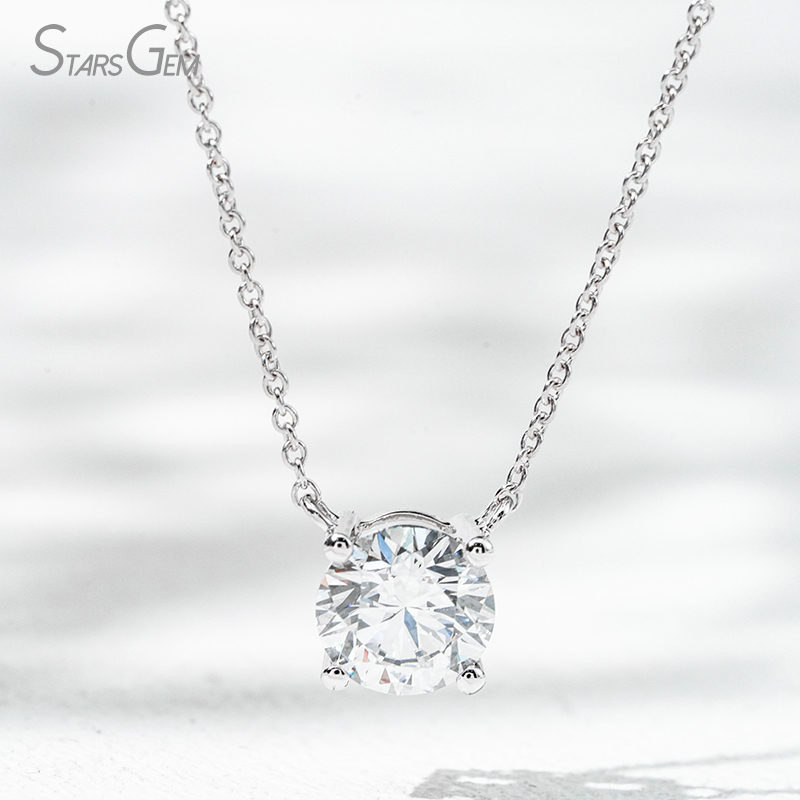
Different diamond cuts distribute weight differently across the chest. A round lab diamond pendant necklace distributes weight very evenly. It usually sits in a standard 4-prong or bezel setting. This symmetrical shape requires an 18-inch length to anchor properly. Without sufficient chain slack, the setting might roll or flip outward against the breastbone.
Elongated shapes behave differently. Ovals, Marquise, and Pear cuts naturally drop lower on the chest. Their vertical length adds physical distance to the bottom tip of the stone. Therefore, a 16-inch chain carrying a long Pear cut may function aesthetically like an 18-inch chain.
Chain Thickness and Security
Do not ignore chain thickness. A longer chain carrying a heavy lab diamond requires adequate millimeter width. Thin, delicate chains look beautiful but lack tensile strength. Daily movement puts stress on the metal links. We recommend at least a 1.2mm width for chains over 20 inches. Cable chains and wheat chains offer exceptional durability. They resist snapping and support large diamonds effortlessly.
Your body type dictates how a necklace ultimately looks. A one-size-fits-all approach often fails in fine jewelry. You must align the chain length with your specific neck circumference and torso height. This ensures visual harmony and daily comfort.
Neck Circumference Baseline
Measuring your neck provides a critical baseline. A standard sizing rule exists in the industry. You should measure your neck and add two inches for a comfortable collar fit. You should add four inches for a standard pendant drop.
Consider the math behind this rule. A 16-inch chain on a 15-inch neck will fit like a tight choker. It will restrict breathing and look pinched. Conversely, the exact same chain on a 13-inch neck will drape elegantly like a standard pendant. Always factor in these personal dimensions before buying.
Height and Torso Considerations
Your vertical height heavily influences how a chain flatters your body. Chains create visual lines that either elongate or truncate your frame.
Petite (Under 5'4"): Stick to 16 or 18-inch chains. These lengths maintain your natural proportions. They keep the focal point high. Longer chains can elongate the torso, but they often overwhelm smaller frames and look disproportionate.
Average (5'4" - 5'9"): This height range offers maximum versatility. You can seamlessly accommodate 18 to 20-inch lengths. The 18-inch chain remains the most flattering middle ground.
Tall (5'9" and above): Standard rules shift for taller individuals. An 18-inch chain may look unusually short, mimicking a choker. We highly recommend 20 to 22-inch chains. These lengths achieve the standard collarbone drop on longer torsos.
Your daily wardrobe dictates your jewelry needs. A chain that looks stunning with an evening gown might clash with a casual sweater. You must evaluate how the necklace interacts with your most frequent outfits.
Everyday vs. Occasion Wear
Assess your primary use case before purchasing. Everyday pieces need to clear casual necklines effortlessly. A daily necklace must survive t-shirts, blouses, and active movement. It should not get tucked into your shirt constantly. It should not snag on loose threads. If you buy lab grown diamond jewelry for daily wear, prioritize an 18-inch length. Occasion wear allows for more extreme lengths, like dramatic 24-inch drops for plunging necklines.
Neckline Mapping
Matching the chain to your clothing neckline is an art form. The necklace shape should complement the fabric cut, not fight against it.
V-Necks & Scoop Necks: The 18-inch chain works perfectly here. It mirrors the geometric drop of the neckline. It fills the bare skin space without overlapping the fabric edges.
Crew Necks & Turtlenecks: High collars demand longer chains. You need 20 to 24-inch lengths. These ensure the diamond sits visibly over the thick fabric. A shorter chain will clumsily compete with the collar hem.
Strapless or Off-the-Shoulder: You want to keep the visual focus close to your face. A 16-inch length works best here. It leaves the shoulders bare and highlights the collarbone.
Buying a necklace blindly often leads to frustrating exchanges. You can eliminate sizing risks through careful measurement. You can also utilize modern jewelry innovations to guarantee a perfect fit.
The String Test Validation
You can easily simulate necklace lengths at home. You do not need professional jeweler tools. Follow this simple process to map your ideal drop.
Take a standard piece of household string or yarn.
Cut the string into three distinct lengths: 16, 18, and 20 inches.
Attach a small, heavy object to the center. A house key or a metal washer works perfectly. This simulates the gravitational drop of a heavy diamond pendant.
Clasp each string around your neck one by one.
Evaluate the drape while wearing your most commonly worn shirts. Notice where the simulated pendant rests against the fabric.
Opting for Adjustable Chains
Adjustable chains offer the ultimate peace of mind. They act as the primary solution for high-value gift purchases. We strongly advise this route if you do not know the recipient's exact measurements.
Look for chains designed with multiple jump rings. A popular style features rings at 16 inches and 18 inches. Another common variation offers 18 and 20-inch settings. This intelligent design allows the wearer to modify the length instantly. They can shorten it for a summer dress or lengthen it for a winter turtleneck. This flexibility reduces the need for post-purchase jeweler alterations. Traditional cutting and soldering can weaken the chain over time. Adjustable links solve this problem completely.
Selecting the correct chain length requires careful consideration of multiple variables. You must balance body proportions, diamond weight, and wardrobe habits. Follow these final steps to ensure a flawless purchase:
Always finalize your pendant specifications first. The stone's weight and shape will ultimately dictate your chain requirements.
Default to an 18-inch chain for standard gifts. It remains the safest, most versatile choice for most body types.
Size up to a 20-inch or 22-inch chain if you purchase a lab diamond over two carats. This prevents the heavy stone from choking the neckline.
Choose adjustable chains featuring multiple jump rings. This guarantees flexibility across different seasonal wardrobes.
Select thicker chain styles, like cable or wheat, to ensure lasting security for your valuable center stone.
A: Shortening a chain is generally simple and structurally safe. A jeweler simply removes links and reattaches the clasp. Lengthening is much more complicated. It requires soldering additional chain segments or replacing the piece entirely. Adding new segments can compromise the aesthetic flow and weaken the structural integrity. We always recommend buying a slightly longer adjustable chain instead.
A: It does not inherently require a specific length, but it absolutely requires a stronger chain. However, heavier diamonds physically pull the chain down into a sharp V-shape. This lowers the resting point. Because of this, you may want to avoid extra-long chains that drop the stone awkwardly below the optimal sternum placement.
A: Men's sizing starts notably larger due to broader shoulder and neck proportions. A 20-inch chain usually sits at the collarbone. This mirrors the look of an 18-inch chain on women. Lengths between 22 and 24 inches serve as the standard for pendants worn over a t-shirt or tucked just under an open collar.
A: Yes. Rigid chain styles, like herringbone or snake chains, do not bend sharply. They sit higher on the chest and resist the diamond's pull. Fluid styles, like cable or box chains, drape easily into a natural V-shape. This flexibility significantly lowers the pendant's final resting spot on your body.