- All
- Product Name
- Product Keyword
- Product Model
- Product Summary
- Product Description
- Multi Field Search
Views: 0 Author: Site Editor Publish Time: 2026-07-30 Origin: Site
Purchasing a lab grown gemstone wedding ring is a smart, sustainable investment. It reflects a deep commitment to your partner alongside mindful consumerism. Proper stewardship remains essential to maintain its initial brilliance over time. Despite being chemically and optically identical to mined stones, these beautiful gems face constant daily hazards. Your ring is not immune to harsh chemical exposure, abrasive surfaces, or accidental structural damage. The precious metals securing your stones also remain highly vulnerable to common environmental factors. This guide outlines an evidence-based maintenance framework to protect your pieces. You will learn practical daily habits to prevent irreversible damage. We explore the core vulnerabilities of different gem types and setting styles. By understanding these nuances, you ensure your ring shines flawlessly for decades. Follow these actionable steps to maximize the lifespan and beauty of your treasured ring.
Chemical Equivalence: Lab-grown gemstones require the exact same care protocols as their mined counterparts; there is no structural disadvantage.
Routine Maintenance: Weekly at-home cleaning prevents the buildup of oils and lotions that dull light performance.
Setting Vulnerabilities: Rings with multiple stones, such as eternity bands, require stricter wear guidelines due to exposed prongs.
Professional Inspections: Bi-annual professional prong checks and ultrasonic cleanings are critical for mitigating the risk of stone loss.
Many buyers mistakenly believe lab-created stones behave differently under stress. We must clarify a core scientific fact regarding durability. Lab-grown stones share the exact same Mohs hardness rating as natural stones. The Mohs scale measures resistance to scratching, rather than resistance to shattering. For example, lab diamonds rate a perfect 10 on this scale. Lab sapphires score an impressive 9. Lab emeralds sit lower at 7.5 to 8.
This chemical equivalence dictates how we evaluate daily durability. Diamonds and rubies easily withstand rigorous daily wear. They resist scratches from almost all everyday materials. However, lab-grown emeralds or softer gems remain prone to chipping upon hard impact. They require highly protective settings like metal bezels or diamond halos.
While hardness defines scratch resistance, toughness dictates how well a stone absorbs blunt impact. Diamonds possess perfect hardness but only moderate toughness along specific cleavage planes. A sharp blow at the wrong angle can still chip a lab-grown diamond. Therefore, understanding both properties helps you make informed choices about daily wear routines.
Furthermore, chemical sensitivities play a massive role in overall ring longevity. While the gemstone itself is highly resilient, the surrounding metals react poorly. Jewelers utilize gold and platinum alloys to create ring settings. Pure gold is too soft for jewelry, requiring mixing with other harder metals. These specific alloys easily suffer from harsh household chemicals. Bleach and chlorine weaken gold alloys dramatically over time. This chemical degradation threatens the structural security of your stones. Understanding this relationship between resilient stones and vulnerable metals forms the foundation of proper care.
Gemstone Type | Mohs Hardness | Daily Wear Suitability | Primary Vulnerability |
|---|---|---|---|
Lab Diamond | 10 | Excellent | Oil buildup dulling sparkle |
Lab Sapphire / Ruby | 9 | Excellent | Hard impacts on exposed facet edges |
Lab Emerald | 7.5 - 8 | Moderate | Chipping and internal fracture expansion |
Establishing a consistent daily routine prevents most physical damage. Jewelers widely recommend the "Last On, First Off" rule for fine jewelry. Your ring should be the final item you put on before leaving home. It must also be the first item you remove upon returning. This simple habit minimizes unnecessary exposure to daily hazards.
You must identify high-risk scenarios and remove your ring proactively. Physical impact easily warps metal bands and crushes delicate prongs. Weightlifting poses a severe threat to circular ring shapes. The intense grip pressure directly bends the bottom of the shank. High-intensity sports and heavy manual labor carry similar risks. A warped band immediately loosens the tension holding your gemstones securely.
Chemical exposure creates another major category of daily risk. Swimming in chlorinated pools weakens gold alloys rapidly. Repeated chlorine exposure causes microscopic stress fractures within the metal prongs. Cleaning your home using bleach or abrasives damages metal finishes quickly. Applying cosmetics, hairsprays, or thick lotions coats your gems heavily. This invisible coating severely reduces light refraction and overall sparkle.
Rapid temperature changes also pose a hidden risk. Moving from a hot tub into freezing weather causes metal to contract slightly. This microscopic contraction can temporarily loosen the grip of the prongs. Always remove your ring before entering extreme temperature environments.
Proper storage matters just as much as mindful wearing habits. We strongly recommend isolated storage for all valuable pieces. Use individual soft fabric pouches or dedicated velvet-lined boxes. Harder stones like diamonds easily scratch softer metal bands. They can also permanently damage other delicate pieces of lab grown gemstone jewelry sharing the same space. Keep them completely separated to preserve their flawless polished finish.
Routine at-home cleaning restores brilliance quickly and safely. You do not need expensive commercial solutions to achieve professional results. A simple, methodical approach eliminates dulling oils effectively.
Follow these core steps for safe maintenance:
Prepare the degreasing solution: Fill a small bowl with warm water. Add a few drops of mild, degreasing dish soap. Dish soap contains active surfactants designed to break down tough skin oils. Let the ring soak undisturbed for 15 to 20 minutes. This soaking phase loosens stubborn dirt trapped beneath the setting.
Apply gentle mechanical action: Remove the ring and gently scrub the piece. Use a dedicated extra-soft toothbrush exclusively for jewelry. Baby toothbrushes work exceptionally well for this specific task. Focus heavily on the pavilion, or underside, of the stone. Natural skin oils and hand lotions accumulate heavily in this hidden area. Use light, circular motions around the prongs.
Dry the piece safely: Rinse the ring thoroughly under warm running water. Ensure you plug the sink drain beforehand to prevent accidental loss. Use a clean, lint-free microfiber cloth to dry the ring completely. Avoid rough paper towels entirely. Paper fibers easily scratch soft metal alloys over time.
For a truly flawless finish, consider using canned air. After drying with a microfiber cloth, a quick burst of compressed air removes moisture hiding beneath the stone. This prevents hard water deposits from forming on the pavilion over time.
Risk mitigation is equally important for safe maintenance. You must avoid several common household items completely. Do not use baking soda, toothpaste, or harsh abrasive cleaners. These gritty substances scratch precious metals and dull polished surfaces instantly.
Ultrasonic cleaners present a highly nuanced risk profile. They send intense microscopic vibrations through a heated liquid bath. This aggressive process is perfectly safe for flawless lab diamonds. It also works exceptionally well for most clean lab sapphires. However, you must strictly avoid ultrasonic devices for lab emeralds. Stones containing significant internal inclusions also face severe danger. The rapid vibrations easily cause existing fractures to expand rapidly. This internal stress can shatter a compromised gemstone entirely.
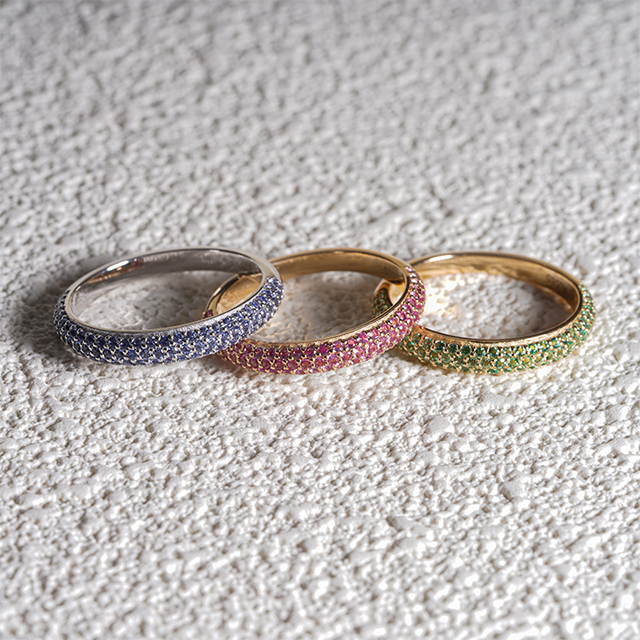
A lab grown gemstone eternity ring requires highly specialized care routines. Its unique design sets stones continuously around the entire band. This beautiful continuous setting introduces a major structural vulnerability. The bottom of the ring sustains constant, unavoidable contact. It hits hard surfaces like steering wheels, door handles, and metal desks daily. Every minor impact transfers shock directly to the exposed bottom stones.
Consider these specific care dimensions for eternity styles:
Heightened risk of prong damage: Constant tapping against surfaces causes delicate prongs to bend or wear down prematurely. This friction inevitably leads to loosened stones and eventual loss.
Inability to resize easily: Eternity bands lack a plain metal sizing bar at the base. You cannot easily resize them without disrupting the pattern. Therefore, the ring must never endure severe pressure that alters its circular shape.
Increased dirt accumulation: More closely set stones mean more tiny crevices. Hand lotions and natural oils trap debris efficiently between the tightly packed gems. This requires more frequent soaking.
Eternity rings utilize various setting styles affecting durability. Channel-set eternity bands offer slightly more protection because solid metal walls enclose the stones. However, shared-prong eternity bands expose the sides of the gems entirely. This shared-prong style maximizes light return but requires extreme caution to prevent accidental chipping.
You must implement stricter wear guidelines for these specific designs. Remove eternity bands during any activity involving tight gripping or heavy lifting. Take actionable next steps to monitor their structural integrity closely. Require more frequent visual inspections of the continuous setting. Buy an inexpensive 10x jeweler's loupe for precise at-home checks. Examine the prongs under magnification every few weeks. Look for bent metal or asymmetrical spacing between stones. If any stone moves when touched lightly with a pin, stop wearing it immediately. Place it in a secure box until a professional can tighten the setting.
Transitioning from daily DIY habits to professional upkeep guarantees longevity. At-home care handles surface-level aesthetics perfectly. However, structural security requires a highly trained eye and specialized tools. You must scale your care routine appropriately as the ring ages.
We strongly recommend scheduling bi-annual jeweler inspections. Professionals thoroughly check for loose stones and severely worn prongs. They perform necessary re-tipping to secure vulnerable gems properly. Re-tipping involves adding new metal to worn prongs before they fail. Jewelers also evaluate the band for hidden metal fatigue or micro-cracks.
Furthermore, white gold rings require routine maintenance to maintain their brilliant color. White gold naturally possesses a faint yellowish tint. Jewelers provide professional rhodium plating services to mask this natural color. This electroplating process restores the bright white finish lost through normal daily friction. You will likely need this service every twelve to eighteen months.
Compliance with warranty terms is another critical long-term factor. Many buyers forget to check their manufacturer or retailer conditions. Most jeweler warranties require documented professional inspections. You typically need these formal checks every six to twelve months. Failing to document them often renders the warranty completely invalid.
Keep a dedicated folder for all your maintenance records. Ask your jeweler to sign and date a physical inspection card. This paper trail proves invaluable if you ever need to file an insurance claim or utilize a lifetime warranty.
Protect yourself against catastrophic events as well. We highly recommend securing standalone jewelry insurance immediately after purchase. Standard jeweler warranties rarely cover accidental damage, theft, or unexplained loss. Homeowner policies often limit coverage for high-value jewelry pieces. A dedicated insurance policy provides complete peace of mind worldwide.
Proper care of a lab-grown wedding ring remains highly predictable and standard. Consistent daily habits prevent the vast majority of physical damage. Removing your ring during high-risk activities preserves delicate metal prongs. Keeping your jewelry away from harsh chemicals protects the specialized metal alloys.
Take immediate action to protect your investment. Establish a simple weekly cleaning routine today to maintain optimal brilliance. Purchase appropriate mild cleaning supplies, such as an extra-soft toothbrush and microfiber cloths. Store them in a dedicated spot near your bathroom sink for easy access.
Finally, reach out to a trusted local jewelry professional. Schedule your first six-month checkup to verify prong security and metal integrity. Taking these proactive steps ensures your cherished investment lasts a lifetime.
A: No. Lab-grown diamonds and sapphires do not change color or cloud. They possess excellent chemical stability. Any visible dullness is strictly surface-level dirt, natural skin oil, or cosmetic lotion. This buildup severely restricts light refraction. A simple soak in warm soapy water restores their original brilliance entirely.
A: While hand sanitizer will not damage the lab-grown gemstone itself, it poses risks to the setting. Excessive alcohol exposure degrades the rhodium plating on white gold rings much faster. It also leaves a dulling residue on the stone's surface over time. Remove your ring before applying sanitizer.
A: No. Ultrasonic cleaners are safe for flawless lab diamonds and most lab sapphires. However, they are highly dangerous for lab emeralds, pearls, or any gem containing internal fractures. The intense microscopic vibrations easily expand inclusions, causing the stone to shatter completely. Always consult a jeweler before using one.