
- All
- Product Name
- Product Keyword
- Product Model
- Product Summary
- Product Description
- Multi Field Search
Views: 0 Author: Site Editor Publish Time: 2026-04-20 Origin: Site
Selecting everyday Diamond Earrings is a delicate balancing act. You must weigh visual impact against daily comfort. Budget efficiency plays a massive role too. Finding this sweet spot requires looking past aggressive retail marketing. You want them to sparkle noticeably across a meeting room. But they should never drag down your earlobes.
Buyers often overspend on sizing. They choose stones looking disproportionate or feeling impractical for constant 24/7 wear. Many shoppers also fall victim to confusing industry jargon. Terms like "Total Carat Weight" mislead consumers daily. This leads to massive expectation mismatches. The final product arrives looking much smaller than anticipated.
We built a skeptical, evidence-based framework for you. It helps you evaluate millimeter sizes safely. You will learn to assess lifestyle friction properly. We also cover budget optimization strategies. By understanding earlobe anatomy and cut quality, you protect your investment. You will make a definitive, regret-free purchasing decision. Read on to master the math behind the perfect sparkle.
The CTW Rule: "1 Carat" earrings usually mean 0.50 carats per ear. Always evaluate based on single-stone millimeter diameter, not just carat weight.
The Universal Sweet Spot: 0.50 to 1.00 CTW (0.25–0.50ct per ear) provides the optimal balance of presence and low-friction wear for most professionals.
Proportions Matter: Ideal sizing is dictated by earlobe anatomy—the diamond should cover 50% to 66% of the lobe's width.
Cut Dictates Size: An "Ideal" cut reflects more light, making a smaller diamond visually outperform a poorly cut, heavier stone.
Security is Non-Negotiable: Everyday wear requires mechanical locking backings (like La Pousette) to mitigate the risk of loss.
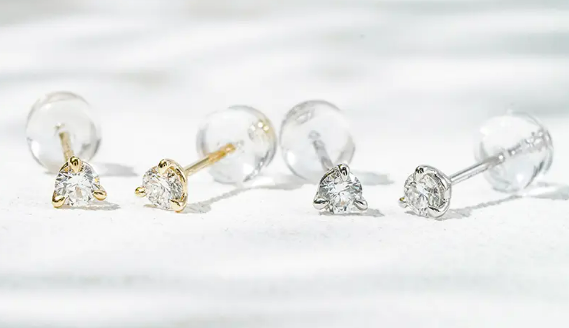
Misunderstanding standard jewelry sizing metrics creates a significant business problem. It leads directly to expectation mismatches. Shoppers misallocate their budgets constantly. They assume carats equal physical dimensions. This assumption is fundamentally flawed. Retailers often benefit from this widespread confusion. They use specific terminology to make stones sound larger. You must decode this language to buy smartly.
The most common retail trap involves Total Carat Weight (CTW). You might see a tag advertising "1.00 Carat Diamond Studs." You naturally assume each ear gets a one-carat stone. This is false. CTW measures the combined weight of all diamonds in the pair. A 1.00 CTW pair equates to two 0.50-carat stones. If you want a one-carat diamond on each earlobe, you must purchase a 2.00 CTW pair. Always ask for the per-ear carat weight before discussing price.
Weight does not equal visible surface area. Carats measure mass. Millimeters measure the actual footprint visible on your ear. Two diamonds weighing the exact same amount can look drastically different in size. A deeply cut diamond hides its weight below the surface. It looks smaller from the top. You should always evaluate millimeter dimensions instead.
Here are baseline conversions for standard round ideal cuts:
0.25 CTW (0.12ct per ear): ~3.2mm in diameter.
0.50 CTW (0.25ct per ear): ~4.1mm in diameter.
1.00 CTW (0.50ct per ear): ~5.1mm in diameter. This resembles the size of a standard pencil eraser.
2.00 CTW (1.00ct per ear): ~6.5mm in diameter. This roughly matches the size of a standard green pea.
We break down sizing into three specific solution categories. Each category produces a distinct aesthetic outcome. Each also carries different daily functionality profiles. You must align your choice with your personal routine. There is no single correct answer. Your choice depends entirely on how you live your life.
Size Tier | Ideal Candidate | Major Trade-offs |
|---|---|---|
Minimalist / Active (0.25 – 0.50 CTW) | Gym-goers, parents of young children, multiple-piercing stacks. | Zero wear-friction. Lacks a standalone "wow" factor. |
Universal Standard (0.50 – 1.00 CTW) | Seamless transition from professional office environments to evening events. | Noticeable sparkle. Does not stretch the earlobe. Safest investment for gifting. |
Statement Tier (1.50 – 2.00+ CTW) | Bold personal styling, executive presence, or significant milestone upgrades. | Higher risk of drooping on thin earlobes. Requires specialized, reinforced backings. |
These pieces sit flush against the ear. They measure roughly 3mm to 4mm per ear. They represent the ultimate low-maintenance option. Active individuals love them. Parents of toddlers appreciate them. Tiny hands cannot grab these easily. They also work perfectly for secondary or tertiary piercings. They provide zero wear-friction. You can sleep in them comfortably. However, they lack a standalone statement quality. They offer subtle shimmer rather than blinding brilliance.
Industry experts call this the sweet spot. It offers a seamless transition between contexts. You can wear them to a corporate board meeting. You can keep them on for an elegant evening dinner. The 4mm to 5mm diameter provides highly noticeable sparkle. Importantly, this weight does not stretch the earlobe downward. It remains visually balanced. If you are gifting, this tier is statistically the safest investment.
These sizes project immediate executive presence. Spanning 6mm to 7mm per ear, they catch eyes instantly. They suit bold personal styling perfectly. Buyers often select them for major milestone upgrades. Ten-year anniversaries frequently prompt this purchase. But statement sizes bring mechanical challenges. Thin earlobes struggle to support the weight. The stones can tilt downward, facing the floor instead of the viewer. They require strict hardware upgrades to sit properly.
You cannot evaluate sizing in a vacuum. You must measure dimensions against physical attributes. Your daily habits dictate practicality. What looks perfect on a model might look bulky on you. A piece surviving an office job might fail during a CrossFit session. We use a structured matrix to guarantee personal fit.
Anatomy dictates ideal sizing. Start by measuring the width of your earlobe. Use a simple ruler or calipers. The optimal everyday diameter should cover half to two-thirds of this width. Let us assume your earlobe measures 10mm across. Your ideal stone diameter sits between 5mm and 6.6mm. This ensures visual harmony. Going beyond 66% coverage creates problems. The piece begins looking like a heavy costume accessory. It loses its delicate fine-jewelry appeal.
Different geometric shapes flatter different facial structures. Proportions matter immensely here.
Round Faces: You want vertical contrast. Larger sizes (0.75+ CTW) work well. Elongated shapes perform even better. Oval and marquise cuts draw the eye downward. They create a slimming illusion.
Angular or Square Faces: You need softening elements. Smaller, brilliant round studs provide this perfectly. The 0.25 to 0.50 CTW range works beautifully. The circular geometry softens sharp jawlines smoothly.
Long Faces: You need horizontal volume. Larger round stones (1.00+ CTW) add width to the cheekbone area. This restores facial balance immediately.
Assess your daily snag risks honestly. Think about chunky sweaters. Consider over-ear headphones. Factor in constant phone use. If your daily activities involve high physical contact near your head, beware. Large stones catch on fibers easily. Prongs bend when struck by heavy headphones. For high-friction lifestyles, cap your size strictly at 5mm. A smaller, secure stone always beats a large, lost stone.
You want the diamond to look larger. You do not want to pay exponential carat premiums. Smart buyers manipulate Total Cost of Ownership (TCO) drivers. They use strategic compromises to maximize Return on Investment (ROI). Throwing money at heavier stones is an amateur strategy. Architectural budget planning yields far superior results.
Never compromise on cut. It serves as the primary engine for edge-to-edge brightness. An "Ideal" or "Excellent" cut bounces light perfectly. It makes the stone look physically wider. A poorly cut diamond leaks light through the bottom. It looks dark, dull, and remarkably small. Buying a larger carat with a poor cut wastes your budget completely. A 0.40ct Ideal cut routinely outshines a 0.50ct Good cut.
The industry prices diamonds at specific weight milestones. We call these "magic numbers." Examples include 0.50ct, 0.75ct, and 1.00ct. Prices jump exponentially at these exact thresholds. You can exploit this pricing model easily. Purchase just shy of these milestones. Buy a 0.45ct stone instead of a 0.50ct. Pick a 0.90ct instead of a 1.00ct. They look visually identical to the naked eye. However, this tactic significantly reduces your overall cost.
Metals can trick the human eye effectively. You do not need a bigger center stone. You just need a smarter setting.
Halo Settings: These add a delicate ring of micropavé around the center. They create a continuous wall of sparkle. A halo can increase the footprint of the earring by up to 2mm. It makes a 0.50ct stone look like a full carat.
Bezel Settings: These wrap the entire edge in smooth metal. White gold or platinum bezels blend seamlessly with the stone. They extend the visual boundary outward. They also provide incredible security.
Modern technology offers brilliant alternatives to earth-mined stones. Transparent evaluation of these materials unlocks massive sizing upgrades.
Lab-Grown Diamonds: These share identical physical and chemical properties with mined stones. They are real diamonds. However, they cost 30% to 50% less. You can easily double your carat size using the exact same budget.
Moissanite: This gemstone originated from meteorites. It features higher light refraction than diamonds. It produces colorful, fiery flashes. It offers extreme cost efficiency. It allows you to achieve massive statement sizes for a fraction of traditional costs.
Everyday wear introduces implementation risks. Losing a high-value piece due to inferior hardware hurts deeply. Protecting your everyday Diamonds Jewelry requires proper mechanical components. A stunning stone means nothing if it falls down a drain. You must evaluate the hidden mechanics behind the sparkle.
The post and the backing do the hardest work. They keep your investment securely attached.
Push Backs (Friction): These rely entirely on metal tension. They carry high risks for everyday wear. The metal stretches and loosens over time. They slide off silently. Avoid them for high-value daily pieces.
Screw Backs: These thread onto the post like a nut on a bolt. They provide excellent security. However, they carry drawbacks. The threads can strip over time. The textured post can irritate your ear piercing during frequent removal.
La Pousette (Locking Grooves): This represents the industry standard for premium studs. It features a mechanical trigger-release lock. You must pinch two tiny buttons to remove it. It clicks into deep post grooves securely. It prevents accidental loss entirely.
The metal holding the stone dictates snag risk. It also changes how the piece sits.
Prong Settings: These maximize light entry. Four prongs offer classic security. Three prongs (the Martini setting) sit much flusher to the ear. They prevent drooping effectively. However, exposed prongs catch on sweaters and loose threads easily.
Bezel Settings: This wraps the stone in a continuous thin rim of metal. It creates zero snag risk. Sweaters glide right over it. It remains highly secure and visually enlarges the piece. It represents the ultimate low-friction daily choice.
Do not guess your preferred size. We strongly recommend a test drive. Buy a cheap pair of cubic zirconia (CZ) studs. Get them in your exact target millimeter size. Wear them constantly for 48 hours. Sleep in them. Shower in them. Work in them. This exposes any lifestyle friction immediately. It proves whether the dimensions suit your face. Do this before committing thousands of dollars to a real purchase.
Finding your perfect match requires strategy, not just spending power. The 0.50 to 1.00 CTW range routinely offers the highest utility. It delivers the lowest friction for daily wear across most lifestyles. Minimalists can size down comfortably. Executives can size up boldly. Both extremes demand proper hardware planning.
Your next steps are straightforward. First, establish a firm budget framework. Do not let retail financing push your limits. Second, map out your earlobe millimeter capacity using a ruler. Finally, prioritize cut quality and locking backings in your shortlisting process. Superior cuts outshine heavier stones. Secure backings ensure those stones stay yours forever.
A: It depends heavily on your earlobe size and workplace norms. At roughly 6.5mm per ear, they project significant volume. They are universally considered a bold "statement" size rather than a subtle daily staple. Droop risk remains exceptionally high without proper locking support or a flush Martini setting.
A: Elongated shapes carry more of their weight on the surface. Ovals, Marquise, and Pear cuts feature larger face-up areas. This geometry makes them appear significantly larger than round brilliant cuts of the exact same carat weight. They stretch across the earlobe, maximizing visual real estate.
A: Yes. People view earrings from a conversational distance, unlike engagement rings. Dropping to VS2 or SI1 clarity frees up substantial budget. You can use this money for a larger size or a superior cut. Ensure the stones remain "eye-clean." You will sacrifice zero visible beauty.


