
- All
- Product Name
- Product Keyword
- Product Model
- Product Summary
- Product Description
- Multi Field Search
Moissanite is a stunning gemstone celebrated for its brilliance, fire, and durability. Often compared to diamonds, it offers a sparkling and sustainable alternative for fine jewelry. From engagement rings to pendants, moissanite combines elegance, toughness, and affordability. Its unique optical properties, coupled with ethical lab-grown production, have made it a favorite choice for jewelers and gem enthusiasts worldwide.
Moissanite is a silicon carbide (SiC) gemstone with qualities that distinguish it from traditional gemstones. Its extraordinary brilliance and fire set it apart, giving jewelry a captivating sparkle that rivals even diamonds. Unlike diamonds, moissanite is often lab-grown, ensuring consistency in color, cut, and clarity while promoting ethical and eco-friendly sourcing.
Its rising popularity in engagement rings and other fine jewelry is not surprising. The gem’s ability to withstand everyday wear, combined with its affordability, makes it an excellent choice for those seeking both beauty and practicality.
Moissanite was first discovered in 1893 by Dr. Henri Moissan, a French chemist who found tiny crystals in an Arizona meteorite crater. Initially mistaken for diamonds, these silicon carbide crystals revealed a unique chemical structure under close examination.
Early attempts to reproduce moissanite in laboratories were limited by technology. Producing large, gem-quality stones was nearly impossible in the early 20th century. As a result, natural moissanite remained exceptionally rare, highly valuable, and largely inaccessible to the general market.
The 1990s brought major advancements in producing lab-grown moissanite. Companies like Charles & Colvard developed techniques to grow large, high-quality crystals suitable for jewelry. Lab-grown moissanite offers precise color, cut, and clarity, making it a reliable alternative to natural stones.
Charles & Colvard played a crucial role in commercializing moissanite, making it widely available and affordable. By standardizing the quality of lab-grown stones, they enabled jewelers to create pieces that showcased moissanite’s brilliance in engagement rings, earrings, and pendants.
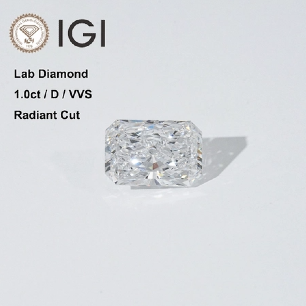
Moissanite’s allure extends far beyond its striking beauty, stemming from its exceptional physical and optical characteristics that set it apart from other gemstones.
Moissanite is composed of silicon carbide (SiC), a compound that makes it both extremely hard and chemically stable. Unlike diamonds, which consist entirely of carbon, moissanite’s silicon carbide structure gives it unique optical qualities. These structural differences influence how light interacts with the gemstone, contributing to moissanite’s signature brilliance and vivid sparkle. The chemical stability also ensures that the gemstone resists tarnishing, discoloration, or chemical damage, making it an excellent choice for jewelry designed for long-term wear.
One of moissanite’s most remarkable features is its high refractive index, ranging from 2.65 to 2.69, compared to diamond’s 2.42. This higher refractive index allows moissanite to bend and reflect light more effectively, creating an intense, eye-catching brilliance. The gemstone sparkles vividly even under artificial indoor lighting, making it visually appealing in everyday settings as well as in more formal lighting conditions.
Moissanite exhibits a fire (light dispersion) of 0.104, significantly higher than diamond’s 0.044. This means that moissanite separates white light into spectral colors more dramatically, producing rainbow-like flashes that are particularly noticeable when the gemstone is in motion. This colorful play of light enhances the dynamic and luxurious appearance of moissanite jewelry, making it highly sought after for rings, pendants, and earrings.
With a Mohs hardness of 9.25, moissanite is extremely resistant to scratches and everyday wear. While slightly softer than diamond, it is durable enough to withstand the rigors of daily life, including accidental bumps and minor abrasions.
Moissanite maintains its beauty under varying conditions, including changes in temperature and exposure to impacts. Jewelers often secure moissanite stones using precise techniques such as laser welding, ensuring that the gemstone remains stable and protected within its setting. Its resilience makes moissanite an ideal choice for engagement rings and other frequently worn jewelry.
Natural moissanite is rare, while lab-grown stones are widely available. Lab-grown moissanite provides consistent quality, color, and size, ideal for precise jewelry designs.
Lab-grown moissanite avoids the environmental and ethical concerns of mining. Consumers seeking sustainable luxury prefer lab-grown stones, knowing they are supporting responsible practices.
Moissanite stands out in the gemstone world due to its unique chemical and optical properties. Unlike diamonds, which are composed of pure carbon and form in a cubic crystalline structure, moissanite consists of silicon carbide and crystallizes in a hexagonal pattern. This structural difference directly influences how light interacts with the gemstone, resulting in distinctive sparkle, brilliance, and fire that make moissanite visually striking.
One of moissanite’s most notable features is its exceptional fire. With a higher dispersion than diamonds, moissanite creates vibrant, rainbow-like flashes of color when exposed to light. This intense play of light gives moissanite jewelry a dynamic and eye-catching quality, particularly appealing to individuals who want pieces that stand out under both natural and artificial lighting. While diamonds possess classic brilliance, moissanite tends to produce more colorful light reflections, enhancing its perceived vibrancy.
Affordability is another area where moissanite distinguishes itself. Moissanite is significantly less expensive than natural diamonds, offering similar visual appeal at a fraction of the cost. Lab-grown moissanite stones provide even greater value, combining ethical sourcing, consistent quality, and durability with a price point accessible to a wider audience. For those seeking an attractive, durable, and budget-friendly alternative to diamonds, moissanite presents a compelling choice.
Feature | Moissanite | Diamond |
Chemical Composition | Silicon Carbide | Carbon |
Crystal Structure | Hexagonal | Cubic |
Refractive Index | 2.65–2.69 | 2.42 |
Fire (Dispersion) | 0.104 | 0.044 |
Typical Use | Rings, Earrings, Pendants | All types of jewelry |
Moissanite’s versatility makes it suitable for nearly all types of jewelry, including engagement rings, earrings, pendants, and bracelets. Its brilliance and fire allow it to shine beautifully in both everyday wear and statement pieces.
· Round Brilliant Cut: The most popular choice, designed to maximize fire and sparkle, making it ideal for engagement rings and classic solitaire designs.
· Cushion Cut: Combines timeless elegance with modern brilliance, perfect for pendants or rings that balance softness with sparkle.
· Oval and Pear Cuts: Elongate fingers or enhance necklace lines, creating refined and elegant statement pieces suitable for both rings and pendants.
· Precision Faceting: Carefully calculated angles allow light to reflect optimally, increasing the gemstone’s overall brilliance and dynamic sparkle.
· Number of Facets: A higher facet count enhances sparkle but may reduce the subtlety of the stone’s clarity, offering a balance between vivid fire and refined elegance.
· Prong: Maximizes light entry, emphasizing brilliance.
· Bezel: Provides secure protection while offering a modern, streamlined look.
· Halo: Surrounds the main stone with smaller gems, intensifying fire and creating visual impact.
· Vintage and Filigree: Intricate designs complement moissanite’s fire, offering a romantic and artistic aesthetic suitable for heirloom-quality jewelry.
These combinations of cuts, faceting techniques, and settings showcase moissanite’s adaptability, ensuring that every piece of jewelry can be both durable and dazzling.
Moissanite is remarkably durable, but regular cleaning helps maintain its brilliance and fire. The safest way to clean moissanite is with mild soap and warm water. Simply soak the gemstone for a few minutes, gently scrub with a soft-bristled brush, and rinse thoroughly to remove any residue. For a deeper clean, ultrasonic cleaners are generally safe for most moissanite stones, though care should be taken if the jewelry includes delicate settings or other gemstones. Avoid harsh chemicals, abrasive cleaners, or bleach, as these can damage metal settings or affect the finish of the stone.
To prevent scratches and preserve its sparkle, store moissanite separately from other jewelry. Use soft pouches or jewelry boxes lined with fabric to cushion the gemstone. Keeping each piece separate reduces the risk of contact with harder stones, such as diamonds, which could scratch the surface. Regularly inspecting and gently polishing moissanite pieces helps maintain their long-lasting brilliance.
Q1: Is moissanite a real gemstone?
Yes, moissanite is a genuine gemstone made of silicon carbide, not a diamond substitute.
Q2: How durable is moissanite compared to a diamond?
It ranks 9.25 on the Mohs hardness scale, just below diamonds (10).
Q3: Does moissanite look like a diamond?
Yes, it has similar brilliance but often shows more rainbow-like fire.
Q4: Can moissanite be used in all jewelry types?
Yes, it is suitable for rings, earrings, pendants, and bracelets.
Q5: Is lab-grown moissanite ethical and sustainable?
Yes, lab-grown stones are environmentally friendly and ethically sourced.
Moissanite is a gemstone that perfectly combines brilliance, durability, and ethical responsibility, making it an exceptional choice for modern jewelry. Its dazzling fire, toughness, and affordability make it ideal for engagement rings, pendants, earrings, and everyday wear. Lab-grown moissanite offers consistent quality and a sustainable alternative to mined gems, appealing to those who value both beauty and environmental responsibility. Whether natural or lab-grown, moissanite continues to redefine luxury jewelry by delivering unmatched sparkle, elegance, and peace of mind for conscientious consumers. For high-quality moissanite stones and expert jewelry solutions, Guangxi Wuzhou Starsgem Co., Ltd. is a trusted source. Explore their premium collection or contact them directly to discover exquisite gemstones and professional craftsmanship tailored to your needs.


